
27.08.2026
Costa del Sol Property Market in 2026. Is Every Property Worth Its Asking Price?
Property prices on the Costa del Sol remain on an upward trajectory in 2026. However, this does not mean they are rising at the same rate in every location, or that every property listed for sale is worth its asking price.
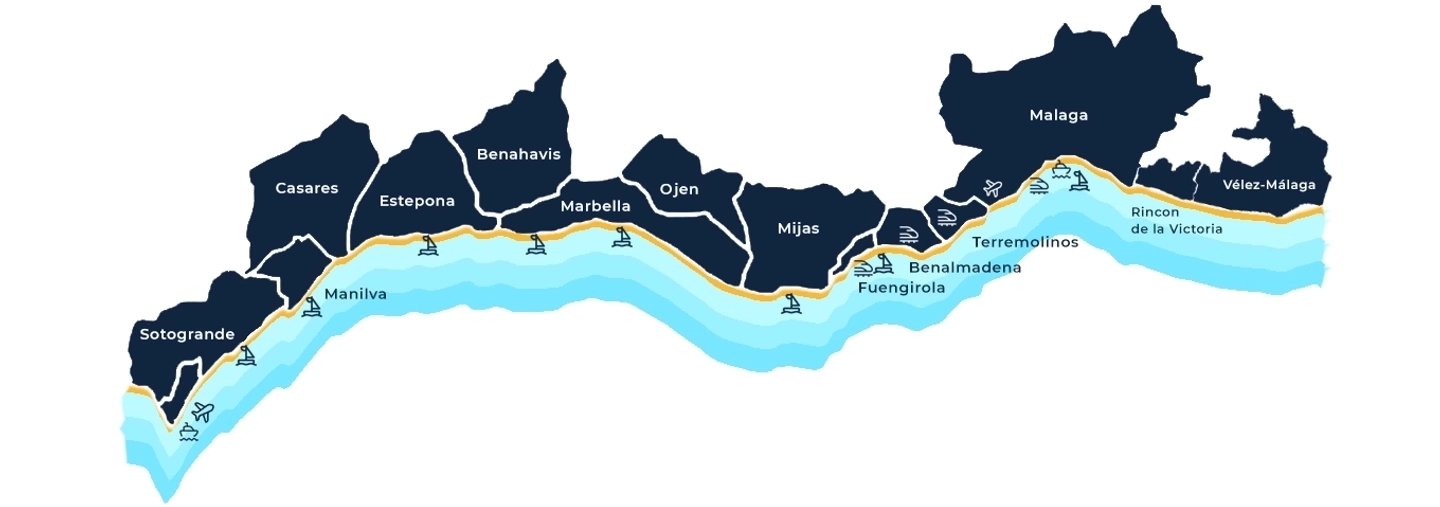
The property market stretching from Málaga to Sotogrande encompasses a wide range of distinct locations. Each attracts a different buyer profile, offers a different lifestyle and suits different purchasing objectives. A family planning to relocate permanently will look for a different type of property from someone seeking a holiday home, while an investor focused on rental income or capital appreciation will have different priorities again.
The Costa del Sol is not an inexpensive market. It is home to some of Europe’s most recognised prime residential destinations. Marbella is included in Knight Frank’s global PIRI 100 index of luxury residential markets, and the firm identifies it as a destination that remains in strong demand as a generational family retreat. At the same time, the region’s property offering is sufficiently diverse to include both residences designed for the wealthiest buyers and properties suited to clients with more moderate budgets who are still looking within the premium segment.
The Costa del Sol is not an inexpensive market. It is home to some of Europe’s most recognised prime residential destinations. Marbella is included in Knight Frank’s global PIRI 100 index of luxury residential markets, and the firm identifies it as a destination that remains in strong demand as a generational family retreat. At the same time, the region’s property offering is sufficiently diverse to include both residences designed for the wealthiest buyers and properties suited to clients with more moderate budgets who are still looking within the premium segment.
A wide choice does not, however, mean that every property represents a good purchase.
Even in a rising market, it is possible to buy a property that later proves difficult to sell without a significant price reduction.
That is why it is not enough to ask whether property prices on the Costa del Sol will continue to rise. The priority is to determine whether a specific property, in its particular location and in relation to the buyer’s objective, is correctly priced and has genuine potential to retain or increase its value.
Even in a rising market, it is possible to buy a property that later proves difficult to sell without a significant price reduction.
That is why it is not enough to ask whether property prices on the Costa del Sol will continue to rise. The priority is to determine whether a specific property, in its particular location and in relation to the buyer’s objective, is correctly priced and has genuine potential to retain or increase its value.
1. Property Prices on the Costa del Sol Are Not Rising at the Same Rate
Data from July 2026 show the significant differences that exist between various parts of the coast.
Source: Idealista price reports, July 2026, and a separate report for Sotogrande. The data reflects asking prices rather than completed transaction prices. Since July 2026, idealista has applied an updated methodology when compiling its reports.
| Location | Average asking price | Annual change |
|---|---|---|
| Málaga | € 3,937 /m² | +6.9% |
| Torremolinos | € 4,218 /m² | +11.1% |
| Benalmádena | € 4,175 /m² | +7.5% |
| Fuengirola | € 4,451 /m² | +3.8% |
| Mijas | € 3,684 /m² | +8.9% |
| Marbella | € 5,950 /m² | +4.6% |
| Benahavís | € 5,496 /m² | +7.3% |
| Estepona | € 4,902 /m² | +17.0% |
| Casares | € 3,145 /m² | −3.1% |
| Manilva | € 3,029 /m² | +12.7% |
| Sotogrande | € 3,918 /m² | +10.1% |
Source: Idealista price reports, July 2026, and a separate report for Sotogrande. The data reflects asking prices rather than completed transaction prices. Since July 2026, idealista has applied an updated methodology when compiling its reports.
In most of the locations analysed, asking prices were higher than a year earlier, but the rates of change varied considerably. Estepona recorded an increase of 17%, compared with 3.8% in Fuengirola. In Casares, the average asking price fell by 3.1%, whereas it rose by 12.7% in neighbouring Manilva.
These figures do not mean that every property in Estepona increased in value by 17% or that all properties in Casares lost value. Averages are influenced by factors including the types of properties available during a given period, their standard, size and precise location, as well as the proportion of new developments entering the market. Nevertheless, the comparison clearly demonstrates why the Costa del Sol cannot be treated as a single, uniform property market.
Marbella’s average asking price was approximately 96% higher than Manilva’s — almost double. This does not automatically make Marbella the better choice and Manilva the worse one. Each location offers a different type of property, infrastructure, environment and potential pool of future buyers.
A higher price may be justified by limited supply, the prestige of the address and sustained international demand. It may also reflect unrealistic expectations on the part of the seller. A lower price may indicate an opportunity for capital appreciation, but it can also point to weaker liquidity or a substantial future supply of similar properties. The average price per square metre alone does not reveal whether a purchase represents good value.
A Rising Market Does Not Undo Buying Mistakes
Rising average prices can conceal three problems: overpaying at the outset, choosing a property with a limited pool of future buyers and purchasing in an area where many similar properties may enter the market in the years ahead. If the owner needs to sell earlier than planned, overall market growth may not be sufficient to recover the purchase price, transaction costs and money invested in the property.
Price growth should therefore provide context for the decision rather than serve as its sole justification.
These figures do not mean that every property in Estepona increased in value by 17% or that all properties in Casares lost value. Averages are influenced by factors including the types of properties available during a given period, their standard, size and precise location, as well as the proportion of new developments entering the market. Nevertheless, the comparison clearly demonstrates why the Costa del Sol cannot be treated as a single, uniform property market.
Marbella’s average asking price was approximately 96% higher than Manilva’s — almost double. This does not automatically make Marbella the better choice and Manilva the worse one. Each location offers a different type of property, infrastructure, environment and potential pool of future buyers.
A higher price may be justified by limited supply, the prestige of the address and sustained international demand. It may also reflect unrealistic expectations on the part of the seller. A lower price may indicate an opportunity for capital appreciation, but it can also point to weaker liquidity or a substantial future supply of similar properties. The average price per square metre alone does not reveal whether a purchase represents good value.
A Rising Market Does Not Undo Buying Mistakes
Rising average prices can conceal three problems: overpaying at the outset, choosing a property with a limited pool of future buyers and purchasing in an area where many similar properties may enter the market in the years ahead. If the owner needs to sell earlier than planned, overall market growth may not be sufficient to recover the purchase price, transaction costs and money invested in the property.
Price growth should therefore provide context for the decision rather than serve as its sole justification.
2. The Costa del Sol Is Made Up of Distinct Micro-Markets
The term “Costa del Sol” is convenient, but it is too broad to serve as the basis for choosing a property. Even neighbouring towns can differ in their type of development, availability of land, resident profile, seasonality of demand, price levels and number of planned projects. Differences also exist within a single municipality or residential development, and sometimes even between one side of a street and the other.
2.1. MÁLAGA, TORREMOLINOS, BENALMÁDENA, FUENGIROLA AND MIJAS
Málaga is a year-round city with its own job market, services, universities, transport network and stable residential demand. It should therefore not be assessed solely as a holiday destination. Its individual districts differ in their type of development, access to the beach, transport connections and resident profile. A property in the historic centre must be evaluated differently from an apartment in a coastal district or a home in an area chosen primarily for permanent living.
Torremolinos, Benalmádena and Fuengirola combine a coastal lifestyle with well-developed urban infrastructure and rail connections to Málaga and the airport. This matters both to people planning a permanent move and to owners of holiday homes or rental properties. The ability to manage everyday life without a car, access to shops, restaurants and services, and the distance to the nearest railway station can all influence a property’s appeal and the number of potential tenants or future buyers.
These towns should not be treated as uniform markets either. In Benalmádena, the coastal area of Benalmádena Costa, Arroyo de la Miel and Benalmádena Pueblo offer different living environments. In Fuengirola, factors such as the distance from the beach, town centre and railway are important, while individual areas of Torremolinos differ in their development density, seasonality and surrounding environment. Two properties within the same town may therefore meet entirely different needs and offer different rental or resale potential.
Mijas requires an even more detailed breakdown. Mijas Pueblo, Las Lagunas and the extensive coastal area of Mijas Costa offer different living environments and types of property. Mijas Pueblo attracts buyers with its traditional architecture and hillside setting, Las Lagunas has a more urban and year-round character, while Mijas Costa encompasses numerous coastal residential developments, new-build projects and properties located near golf courses.
An average price for the entire municipality of Mijas does not reveal whether a particular beachfront apartment, a house within a golf development or a hillside villa has been correctly priced. Assessing an individual property requires consideration of its precise location, access to services, distance from the sea, dependence on a car, planned development in the surrounding area and the number of comparable properties that may compete for the same tenants and buyers in the future.
Málaga is a year-round city with its own job market, services, universities, transport network and stable residential demand. It should therefore not be assessed solely as a holiday destination. Its individual districts differ in their type of development, access to the beach, transport connections and resident profile. A property in the historic centre must be evaluated differently from an apartment in a coastal district or a home in an area chosen primarily for permanent living.
Torremolinos, Benalmádena and Fuengirola combine a coastal lifestyle with well-developed urban infrastructure and rail connections to Málaga and the airport. This matters both to people planning a permanent move and to owners of holiday homes or rental properties. The ability to manage everyday life without a car, access to shops, restaurants and services, and the distance to the nearest railway station can all influence a property’s appeal and the number of potential tenants or future buyers.
These towns should not be treated as uniform markets either. In Benalmádena, the coastal area of Benalmádena Costa, Arroyo de la Miel and Benalmádena Pueblo offer different living environments. In Fuengirola, factors such as the distance from the beach, town centre and railway are important, while individual areas of Torremolinos differ in their development density, seasonality and surrounding environment. Two properties within the same town may therefore meet entirely different needs and offer different rental or resale potential.
Mijas requires an even more detailed breakdown. Mijas Pueblo, Las Lagunas and the extensive coastal area of Mijas Costa offer different living environments and types of property. Mijas Pueblo attracts buyers with its traditional architecture and hillside setting, Las Lagunas has a more urban and year-round character, while Mijas Costa encompasses numerous coastal residential developments, new-build projects and properties located near golf courses.
An average price for the entire municipality of Mijas does not reveal whether a particular beachfront apartment, a house within a golf development or a hillside villa has been correctly priced. Assessing an individual property requires consideration of its precise location, access to services, distance from the sea, dependence on a car, planned development in the surrounding area and the number of comparable properties that may compete for the same tenants and buyers in the future.
2.2. THE GOLDEN TRIANGLE: MARBELLA, BENAHAVÍS AND ESTEPONA
Marbella, Benahavís and Estepona form the area commonly known as the Golden Triangle. They share a strong presence of international buyers and a broad selection of premium properties, but each of these markets has a different structure.
Marbella benefits from global recognition, well-developed luxury infrastructure and sustained demand for properties in prime locations. Benahavís is associated primarily with hillside villa communities, golf courses, privacy and low-density development within its most exclusive enclaves. Estepona, meanwhile, offers a broad selection of new developments and residential communities extending along a long stretch of coastline.
This does not mean that every property within the Golden Triangle has the same potential to retain its value. A prestigious location can support demand, but it is no substitute for analysing the exact address, building quality, views, accessibility, community fees and future supply.
Marbella, Benahavís and Estepona form the area commonly known as the Golden Triangle. They share a strong presence of international buyers and a broad selection of premium properties, but each of these markets has a different structure.
Marbella benefits from global recognition, well-developed luxury infrastructure and sustained demand for properties in prime locations. Benahavís is associated primarily with hillside villa communities, golf courses, privacy and low-density development within its most exclusive enclaves. Estepona, meanwhile, offers a broad selection of new developments and residential communities extending along a long stretch of coastline.
This does not mean that every property within the Golden Triangle has the same potential to retain its value. A prestigious location can support demand, but it is no substitute for analysing the exact address, building quality, views, accessibility, community fees and future supply.

Marbella Must Be Assessed District by District
Source: Idealista, Marbella, July 2026. In the portal’s statistics, Puerto Banús forms part of the broader Nueva Andalucía area. The figures for these two entries should therefore not be added together or treated as two separate statistical markets.
| Marbella area | Average asking price | Annual change |
|---|---|---|
| Nagüeles and The Golden Mile | 8 269 EUR/m² | +6,2% |
| Puerto Banús | 7 500 EUR/m² | +10,0% |
| Nueva Andalucía - Entire Area | 6 249 EUR/m² | +5,8% |
| Río Real and Los Monteros | 5 543 EUR/m² | -2,8% |
| Las Chapas and El Rosario | 5 333 EUR/m² | +2,4% |
| Marbella Pueblo | 5 187 EUR/m² | +5,7% |
| Elviria and Cabopino | 4 620 EUR/m² | +3,1% |
| San Pedro de Alcántara | 4 594 EUR/m² | +2,5% |
The average price for Marbella as a whole is particularly misleading. The municipality includes some of the most expensive addresses in Spain, as well as residential districts offering entirely different price levels and lifestyles.
The average asking price in Nagüeles and the Golden Mile area was almost 80% higher than in San Pedro de Alcántara. At the same time, Río Real and Los Monteros recorded a 2.8% decline in the average asking price, while Puerto Banús saw an increase of 10%.
All these locations form part of Marbella, but they are not interchangeable options for buyers. The Golden Mile is chosen primarily for its prestige, limited availability of land and proximity to key luxury amenities and services. Nueva Andalucía attracts buyers with its well-developed residential infrastructure, golf courses and international community. Marbella East offers more space, access to beaches and a broad selection of residential developments of varying standards.
Although San Pedro de Alcántara is administratively part of Marbella, it should be analysed as a market in its own right. It combines the qualities of a year-round town with local amenities, schools, restaurants and access to the beach. For some buyers, it may be a better place for permanent living than more expensive locations focused primarily on second homes or holiday stays.
There is therefore no single answer to the question of which district of Marbella is the best. The answer depends on the purpose of the purchase, how long the owner intends to hold the property and the type of tenant or buyer it is likely to attract in the future.
The average asking price in Nagüeles and the Golden Mile area was almost 80% higher than in San Pedro de Alcántara. At the same time, Río Real and Los Monteros recorded a 2.8% decline in the average asking price, while Puerto Banús saw an increase of 10%.
All these locations form part of Marbella, but they are not interchangeable options for buyers. The Golden Mile is chosen primarily for its prestige, limited availability of land and proximity to key luxury amenities and services. Nueva Andalucía attracts buyers with its well-developed residential infrastructure, golf courses and international community. Marbella East offers more space, access to beaches and a broad selection of residential developments of varying standards.
Although San Pedro de Alcántara is administratively part of Marbella, it should be analysed as a market in its own right. It combines the qualities of a year-round town with local amenities, schools, restaurants and access to the beach. For some buyers, it may be a better place for permanent living than more expensive locations focused primarily on second homes or holiday stays.
There is therefore no single answer to the question of which district of Marbella is the best. The answer depends on the purpose of the purchase, how long the owner intends to hold the property and the type of tenant or buyer it is likely to attract in the future.
Benahavís Is Not a Cheaper Version of Marbella
Benahavís often appears in the same property searches as Marbella, but it should not be viewed merely as a cheaper alternative. The municipality encompasses inland areas and gated residential communities spanning a wide range of standards and price points.
Choosing Benahavís can mean greater privacy, a larger plot, panoramic views or a location directly beside a golf course. It usually also means greater reliance on a car. Buyers should therefore assess the distance to the beach, schools and everyday amenities, community fees and maintenance costs, as well as the size of the potential tenant or future buyer pool.
The municipality of Benahavís is home to La Zagaleta, one of the most exclusive private residential enclaves on the Costa del Sol and, alongside Marbella’s Golden Mile, one of the symbols of the region’s luxury property market. At the same time, the municipality also includes developments at more accessible price points. Such diversity means that the average for Benahavís as a whole should not be used to assess the price of a specific property.
Benahavís often appears in the same property searches as Marbella, but it should not be viewed merely as a cheaper alternative. The municipality encompasses inland areas and gated residential communities spanning a wide range of standards and price points.
Choosing Benahavís can mean greater privacy, a larger plot, panoramic views or a location directly beside a golf course. It usually also means greater reliance on a car. Buyers should therefore assess the distance to the beach, schools and everyday amenities, community fees and maintenance costs, as well as the size of the potential tenant or future buyer pool.
The municipality of Benahavís is home to La Zagaleta, one of the most exclusive private residential enclaves on the Costa del Sol and, alongside Marbella’s Golden Mile, one of the symbols of the region’s luxury property market. At the same time, the municipality also includes developments at more accessible price points. Such diversity means that the average for Benahavís as a whole should not be used to assess the price of a specific property.
Estepona and the New Golden Mile
Estepona is one of the markets that has attracted a significant number of new developments in recent years. This gives buyers a broad choice of modern apartments, penthouses and villas, but also makes it more important to compare current and future supply.
The term New Golden Mile is widely used in property marketing, but it does not in itself guarantee a particular standard or proximity to all amenities. Properties marketed under this name vary considerably in their distance from the sea, the A-7, schools, restaurants and the centre of Estepona. Buyers should therefore assess the specific residential development rather than purchase on the strength of the area’s name alone.
The 17% year-on-year increase in Estepona’s average asking price reflects strong seller expectations and changes in the composition of available stock. It is not, however, an automatic forecast of a further 17% increase, nor does it confirm that every new development is correctly priced.
Estepona is one of the markets that has attracted a significant number of new developments in recent years. This gives buyers a broad choice of modern apartments, penthouses and villas, but also makes it more important to compare current and future supply.
The term New Golden Mile is widely used in property marketing, but it does not in itself guarantee a particular standard or proximity to all amenities. Properties marketed under this name vary considerably in their distance from the sea, the A-7, schools, restaurants and the centre of Estepona. Buyers should therefore assess the specific residential development rather than purchase on the strength of the area’s name alone.
The 17% year-on-year increase in Estepona’s average asking price reflects strong seller expectations and changes in the composition of available stock. It is not, however, an automatic forecast of a further 17% increase, nor does it confirm that every new development is correctly priced.
2.3. CASARES, MANILVA AND SOTOGRANDE
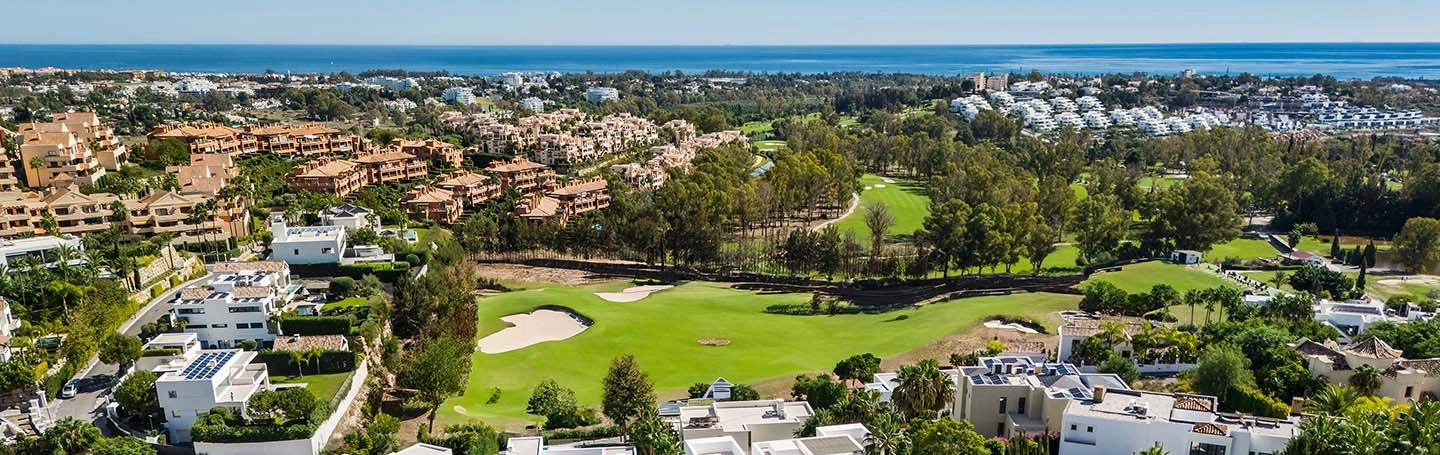
Casares, Manilva and Sotogrande are located close to one another, but they represent three clearly distinct property markets. They differ not only in price levels, but also in their type of development, infrastructure, lifestyle and the profile of people who choose to live there or purchase a second home.
Casares combines the traditional inland village of Casares Pueblo with the coastal area of Casares Costa. Apartments, townhouses and new residential developments dominate along the coast, while the most exclusive segment of the market is concentrated primarily around Finca Cortesin. This renowned luxury resort includes a golf course, hotel, spa, beach club and private residences. Casares is therefore not simply a more affordable alternative to Estepona; however, its premium market is concentrated within specific enclaves.
Manilva has a more residential and holiday-oriented character. San Luis de Sabinillas offers access to everyday amenities and a year-round residential environment, while Puerto de la Duquesa is centred around apartments, restaurants and properties connected with the marina lifestyle. New developments are being built on the surrounding hills, offering larger terraces and views, although residents are usually more dependent on a car. Manilva’s property market is focused more heavily on apartments and homes at accessible price points than on large luxury estates.
Casares, Manilva and Sotogrande are located close to one another, but they represent three clearly distinct property markets. They differ not only in price levels, but also in their type of development, infrastructure, lifestyle and the profile of people who choose to live there or purchase a second home.
Casares combines the traditional inland village of Casares Pueblo with the coastal area of Casares Costa. Apartments, townhouses and new residential developments dominate along the coast, while the most exclusive segment of the market is concentrated primarily around Finca Cortesin. This renowned luxury resort includes a golf course, hotel, spa, beach club and private residences. Casares is therefore not simply a more affordable alternative to Estepona; however, its premium market is concentrated within specific enclaves.
Manilva has a more residential and holiday-oriented character. San Luis de Sabinillas offers access to everyday amenities and a year-round residential environment, while Puerto de la Duquesa is centred around apartments, restaurants and properties connected with the marina lifestyle. New developments are being built on the surrounding hills, offering larger terraces and views, although residents are usually more dependent on a car. Manilva’s property market is focused more heavily on apartments and homes at accessible price points than on large luxury estates.

Sotogrande represents a completely different model. It is an expansive, low-density premium destination with a substantial number of villas set on generous plots. Alongside traditional residences in Sotogrande Costa, Sotogrande Alto and La Reserva feature contemporary villas, often designed as bespoke architectural projects. The marina, meanwhile, offers apartments and houses for buyers seeking direct access to sailing and boating facilities.
Sotogrande’s exclusivity is not determined solely by the properties themselves. The area offers extensive golf facilities, a marina, polo clubs, sailing infrastructure, beach clubs and sports venues. It is also home to the renowned Sotogrande International School, which offers the International Baccalaureate curriculum. The school attracts international families planning to live in the area permanently, supporting year-round demand in part of the market and reducing its dependence on the holiday season.
Sotogrande offers a considerably broader selection of high-end contemporary villas than Casares or Manilva, although substantial differences also exist between its individual areas. As a result, the average price per square metre may not reflect the true character of the market. It combines marina apartments, older homes requiring modernisation and exceptional residences set on large plots. When comparing these three areas, buyers should therefore consider not only price, but above all the type of property, its surroundings, access to infrastructure and the profile of the future buyer.
Sotogrande’s exclusivity is not determined solely by the properties themselves. The area offers extensive golf facilities, a marina, polo clubs, sailing infrastructure, beach clubs and sports venues. It is also home to the renowned Sotogrande International School, which offers the International Baccalaureate curriculum. The school attracts international families planning to live in the area permanently, supporting year-round demand in part of the market and reducing its dependence on the holiday season.
Sotogrande offers a considerably broader selection of high-end contemporary villas than Casares or Manilva, although substantial differences also exist between its individual areas. As a result, the average price per square metre may not reflect the true character of the market. It combines marina apartments, older homes requiring modernisation and exceptional residences set on large plots. When comparing these three areas, buyers should therefore consider not only price, but above all the type of property, its surroundings, access to infrastructure and the profile of the future buyer.

3. Define the Purchase Objective Before Choosing the Location
Before beginning a property search, buyers should define precisely what the property is intended for. The same apartment may be an excellent choice as a holiday home but unsuitable as a long-term rental property. A villa offering privacy may meet the owner’s needs while appealing to only a limited pool of potential buyers when the time comes to sell.
The right location cannot be determined independently of the purchase objective. Only once that objective is clear can the buyer assess whether the priorities should be proximity to the beach, schools and restaurants, privacy, facilities within the residential community, rental potential, limited future supply or the potential for capital appreciation.
A property can fulfil more than one objective, but the priorities must be clearly ranked. If an apartment is intended primarily for family use for several months of the year, the entire decision should not be driven by maximising a theoretical rental yield. If the purchase is intended as an investment, the owner’s personal preferences should not overshadow the needs of future tenants and buyers.
The right location cannot be determined independently of the purchase objective. Only once that objective is clear can the buyer assess whether the priorities should be proximity to the beach, schools and restaurants, privacy, facilities within the residential community, rental potential, limited future supply or the potential for capital appreciation.
| Main purchase objective | Key criteria | Risks requiring assessment |
|---|---|---|
| Permanent residence | year-round amenities, schools, accessibility, functional layout, running costs | seasonality of the area, noise, car dependency, lack of everyday amenities |
| Holiday home | easy access from the airport, terrace, swimming pool, beach, security, ability to leave the property unattended | high community fees, disruption during peak season, limited services outside the main season |
| Long-term rental | stable tenant demand, transport connections, parking, functionality, realistic net rental yield | overestimated rental income, void periods, management and maintenance costs |
| Short-term holiday rental | appeal to guests, legal and planning compliance, approval from the community of owners, registration and operating requirements | prohibition or restriction of rental activity, seasonality, strong competition, regulatory changes |
| Off-plan purchase followed by resale | entry price, developer’s track record, construction schedule, assignment terms, demand at completion | delays, prohibition or cost of assigning the contract, taxes and transaction costs, a high number of unsold units |
| Long-term capital appreciation | hard-to-replicate location, quality, limited supply, broad pool of future buyers | overpaying for a trend, loss of views, ageing of the building, competing developments |
A property can fulfil more than one objective, but the priorities must be clearly ranked. If an apartment is intended primarily for family use for several months of the year, the entire decision should not be driven by maximising a theoretical rental yield. If the purchase is intended as an investment, the owner’s personal preferences should not overshadow the needs of future tenants and buyers.

4. The Asking Price Does Not Always Reflect Market Value
Property portals show the price the seller hopes to achieve. They do not automatically show the price at which a comparable property was ultimately sold. Nor do they account for all the differences between individual properties, including floor level, orientation, views, condition, quality of renovation, noise, privacy, parking, community fees and legal status.
Two different indicators for Marbella illustrate this clearly. In July 2026, idealista reported an average asking price of EUR 5,950/m². By contrast, a Listyco analysis based on data from the Consejo General del Notariado indicated an average of EUR 4,665 per square metre of built area across 4,037 notarial deeds recorded during the 12 months to May 2026.
The difference between these figures must not be interpreted as the average discount achieved through negotiation. The datasets cover different periods and different groups of properties, while also using different definitions of floor area and calculation methods. Nevertheless, the comparison leads to an important conclusion: the listings market and the completed-sales market are not the same market.
A reliable assessment of a specific property’s price should take into account:
◉ completed transactions involving properties that are as comparable as possible, rather than only active listings;
◉ the precise micro-market and the property’s position within the residential development;
◉ the floor area used to calculate the price per square metre;
◉ the property’s condition, the quality of materials and the cost of any necessary work;
◉ floor level, orientation, views, privacy, noise and access to natural light;
◉ parking, storage, terraces and communal areas;
◉ the length of time the property has been on the market and its price-change history;
◉ the number of directly competing properties;
◉ all acquisition, ownership and eventual resale costs.
A citywide average can help indicate the direction of the market. It should not be used as a standalone valuation for an apartment, villa or luxury residence.
Two different indicators for Marbella illustrate this clearly. In July 2026, idealista reported an average asking price of EUR 5,950/m². By contrast, a Listyco analysis based on data from the Consejo General del Notariado indicated an average of EUR 4,665 per square metre of built area across 4,037 notarial deeds recorded during the 12 months to May 2026.
The difference between these figures must not be interpreted as the average discount achieved through negotiation. The datasets cover different periods and different groups of properties, while also using different definitions of floor area and calculation methods. Nevertheless, the comparison leads to an important conclusion: the listings market and the completed-sales market are not the same market.
A reliable assessment of a specific property’s price should take into account:
◉ completed transactions involving properties that are as comparable as possible, rather than only active listings;
◉ the precise micro-market and the property’s position within the residential development;
◉ the floor area used to calculate the price per square metre;
◉ the property’s condition, the quality of materials and the cost of any necessary work;
◉ floor level, orientation, views, privacy, noise and access to natural light;
◉ parking, storage, terraces and communal areas;
◉ the length of time the property has been on the market and its price-change history;
◉ the number of directly competing properties;
◉ all acquisition, ownership and eventual resale costs.
A citywide average can help indicate the direction of the market. It should not be used as a standalone valuation for an apartment, villa or luxury residence.

5. New Build or Resale?
There is no single answer to whether it is better to purchase a new-build or resale property in 2026. The outcome of the investment depends not on the labels “new build” or “resale”, but on the relationship between location, quality, entry price and future liquidity.
New developments may offer contemporary architecture, greater energy efficiency, generous terraces, modern building systems and extensive communal facilities. Buyers should, however, assess how much of the price is justified by the value of the land and the quality of the property, and how much represents a marketing premium charged simply because it is new.
New developments may offer contemporary architecture, greater energy efficiency, generous terraces, modern building systems and extensive communal facilities. Buyers should, however, assess how much of the price is justified by the value of the land and the quality of the property, and how much represents a marketing premium charged simply because it is new.
A resale property may offer something that cannot be replicated quickly: an established location. In an existing building, buyers can assess the actual views, noise levels, sun exposure, quality of community management, level of fees and how the surrounding area functions throughout the year. The disadvantages may include renovation costs, older building systems, lower energy efficiency or the need to adapt the layout to contemporary expectations.
The performance of the wider Spanish market provides additional context. According to the Colegio de Registradores, the number of new-home transactions fell by 11.5% quarter on quarter in the second quarter of 2026, while resale-home transactions declined by 4%. These are nationwide figures rather than statistics specific to the Costa del Sol, so they do not demonstrate weakening local demand for new developments. They do, however, remind buyers that a property being new does not guarantee either a future sale or capital appreciation.
When comparing the two markets, it is worth asking three questions:
1. How easily can this location and its advantages be replicated?
2. Is the purchase price justified when compared with genuine alternatives?
3. How broad will the buyer pool be when the owner decides to sell?
The performance of the wider Spanish market provides additional context. According to the Colegio de Registradores, the number of new-home transactions fell by 11.5% quarter on quarter in the second quarter of 2026, while resale-home transactions declined by 4%. These are nationwide figures rather than statistics specific to the Costa del Sol, so they do not demonstrate weakening local demand for new developments. They do, however, remind buyers that a property being new does not guarantee either a future sale or capital appreciation.
When comparing the two markets, it is worth asking three questions:
1. How easily can this location and its advantages be replicated?
2. Is the purchase price justified when compared with genuine alternatives?
3. How broad will the buyer pool be when the owner decides to sell?

6. What to Check in a New Development
When purchasing a new-build property, price is only one of the factors to consider. Two developments located in the same part of the coast and offered at similar price points may differ significantly in build quality, delivery risk and future resale potential.
The Developer, Documentation and Protection of Payments
Buyers should verify the developer’s track record, the legal status of the land, permits, payment terms, protection provided for the sums paid, the planned completion date and the conditions that apply in the event of a delay. The scope of these checks should be determined by an independent lawyer acting in the buyer’s interests, rather than solely by parties connected with the seller.
When purchasing with the intention of reselling before construction is completed, the contract assignment terms become particularly important. Not every contract allows the buyer’s rights to be freely transferred to a subsequent purchaser, while an assignment may require the developer’s consent or incur a fee. A strategy based on selling before handover cannot rely on the assumption that assignment will “definitely be possible”.
Materials and Build Quality
Visualisations present the intended result, but they are not a substitute for a technical specification. Buyers should assess not only the appearance of the kitchens and bathrooms, but also the windows and doors, thermal and acoustic insulation, air-conditioning system, terrace waterproofing, façade, solar shading and specifications for the communal areas.
The wording “or equivalent” in a specification may give the developer broad discretion to substitute materials. The required standard should therefore be described as precisely as possible, and the completed property should undergo an independent technical and snagging inspection before final settlement.
Buyers should verify the developer’s track record, the legal status of the land, permits, payment terms, protection provided for the sums paid, the planned completion date and the conditions that apply in the event of a delay. The scope of these checks should be determined by an independent lawyer acting in the buyer’s interests, rather than solely by parties connected with the seller.
When purchasing with the intention of reselling before construction is completed, the contract assignment terms become particularly important. Not every contract allows the buyer’s rights to be freely transferred to a subsequent purchaser, while an assignment may require the developer’s consent or incur a fee. A strategy based on selling before handover cannot rely on the assumption that assignment will “definitely be possible”.
Materials and Build Quality
Visualisations present the intended result, but they are not a substitute for a technical specification. Buyers should assess not only the appearance of the kitchens and bathrooms, but also the windows and doors, thermal and acoustic insulation, air-conditioning system, terrace waterproofing, façade, solar shading and specifications for the communal areas.
The wording “or equivalent” in a specification may give the developer broad discretion to substitute materials. The required standard should therefore be described as precisely as possible, and the completed property should undergo an independent technical and snagging inspection before final settlement.
Number of Units and Realistic Running Costs
A large number of apartments within a development is not automatically a disadvantage. It can spread the cost of swimming pools, gardens, security and other amenities across a greater number of owners. At the same time, it may mean that many very similar units enter the sales and rental markets at handover or during the following years.
A smaller development provides a greater sense of privacy and limits direct competition, but the cost of maintaining extensive communal facilities is shared among fewer owners. Buyers should therefore ask not only how many apartments there will be, but also how many phases are planned, how many units have the same layout, what the community fees will be and whether the proposed amenities reflect the genuine needs of future buyers.
Planned Development in the Surrounding Area
A sea view, open outlook and quiet surroundings may account for a significant part of the price. Before purchasing, buyers need to determine whether these are lasting features of the property. An undeveloped plot in front of the terrace does not guarantee that the view will be preserved.
The analysis should cover the local development plan, the designated use of neighbouring land, permits already granted or currently being processed, announced future phases of the same project and other developments planned within the micro-location. New construction may improve infrastructure and enhance the appeal of the area. It may also increase traffic, noise and the supply of competing properties, or obstruct existing views.
The relationship between future supply and genuine demand is crucial. One hundred new apartments in a market with strong demand may be absorbed more readily than twenty units in a location with a limited pool of buyers.
A large number of apartments within a development is not automatically a disadvantage. It can spread the cost of swimming pools, gardens, security and other amenities across a greater number of owners. At the same time, it may mean that many very similar units enter the sales and rental markets at handover or during the following years.
A smaller development provides a greater sense of privacy and limits direct competition, but the cost of maintaining extensive communal facilities is shared among fewer owners. Buyers should therefore ask not only how many apartments there will be, but also how many phases are planned, how many units have the same layout, what the community fees will be and whether the proposed amenities reflect the genuine needs of future buyers.
Planned Development in the Surrounding Area
A sea view, open outlook and quiet surroundings may account for a significant part of the price. Before purchasing, buyers need to determine whether these are lasting features of the property. An undeveloped plot in front of the terrace does not guarantee that the view will be preserved.
The analysis should cover the local development plan, the designated use of neighbouring land, permits already granted or currently being processed, announced future phases of the same project and other developments planned within the micro-location. New construction may improve infrastructure and enhance the appeal of the area. It may also increase traffic, noise and the supply of competing properties, or obstruct existing views.
The relationship between future supply and genuine demand is crucial. One hundred new apartments in a market with strong demand may be absorbed more readily than twenty units in a location with a limited pool of buyers.

7. Liquidity, Rental Potential and Future Resale
A property’s value is not simply the number shown in a listing. Liquidity also matters to the owner: the ability to sell within a reasonable period and without a price reduction significantly greater than current market conditions require.
The most liquid properties generally meet the needs of more than one group of buyers. They may appeal to someone looking for a second home, a buyer relocating permanently and, in some cases, an investor. An unusual property, high running costs or difficult access can each reduce the pool of future buyers, even when the property makes an excellent first impression.
Before purchasing, it is worth viewing the property through the eyes of the next buyer and asking:
◉ Does the location function throughout the year or mainly during the holiday season?
◉ How many similar properties will compete with it?
◉ Do the layout, number of bedrooms and amenities appeal to a broad group of buyers?
◉ Are the community fees justified by the quality of the services provided?
◉ Does the property provide convenient access to the airport, schools, beach and essential amenities?
◉ Could the views, privacy or surroundings change after neighbouring developments are completed?
◉ Would the property remain attractive if overall price growth paused for a year or two?
The most liquid properties generally meet the needs of more than one group of buyers. They may appeal to someone looking for a second home, a buyer relocating permanently and, in some cases, an investor. An unusual property, high running costs or difficult access can each reduce the pool of future buyers, even when the property makes an excellent first impression.
Before purchasing, it is worth viewing the property through the eyes of the next buyer and asking:
◉ Does the location function throughout the year or mainly during the holiday season?
◉ How many similar properties will compete with it?
◉ Do the layout, number of bedrooms and amenities appeal to a broad group of buyers?
◉ Are the community fees justified by the quality of the services provided?
◉ Does the property provide convenient access to the airport, schools, beach and essential amenities?
◉ Could the views, privacy or surroundings change after neighbouring developments are completed?
◉ Would the property remain attractive if overall price growth paused for a year or two?
Rental Yield Must Be Calculated on a Net Basis
Projected rental income is not profit. Gross revenue must be reduced by factors including void periods, management fees, community fees, insurance, maintenance, repairs, utilities paid by the owner and applicable taxes. Assumptions regarding rental rates and occupancy should be based on comparable properties and realistic seasonality, rather than solely on the most profitable week of the holiday season.
For short-term holiday rentals, the financial analysis must be preceded by verification that the activity can be operated legally. Andalusian regulations require compliance with municipal planning rules and the requirements applicable to viviendas de uso turístico. In addition, since 3 April 2025, an owner wishing to begin such an activity in a building governed by a community of owners must generally obtain the community’s prior express approval. The resolution must be supported by three-fifths of all owners who also represent three-fifths of the ownership shares. The property’s legal status, the community statutes and the applicable municipal rules must be verified for the specific unit. The fact that short-term holiday rentals already operate within the same building is not sufficient confirmation.
(Legal and information sources: Junta de Andalucía, Decree 31/2024 and Spanish law: Ley 49/1960, de 21 de julio, sobre propiedad horizontal)
Regulations may change, so an up-to-date legal review is essential before purchasing.
Projected rental income is not profit. Gross revenue must be reduced by factors including void periods, management fees, community fees, insurance, maintenance, repairs, utilities paid by the owner and applicable taxes. Assumptions regarding rental rates and occupancy should be based on comparable properties and realistic seasonality, rather than solely on the most profitable week of the holiday season.
For short-term holiday rentals, the financial analysis must be preceded by verification that the activity can be operated legally. Andalusian regulations require compliance with municipal planning rules and the requirements applicable to viviendas de uso turístico. In addition, since 3 April 2025, an owner wishing to begin such an activity in a building governed by a community of owners must generally obtain the community’s prior express approval. The resolution must be supported by three-fifths of all owners who also represent three-fifths of the ownership shares. The property’s legal status, the community statutes and the applicable municipal rules must be verified for the specific unit. The fact that short-term holiday rentals already operate within the same building is not sufficient confirmation.
(Legal and information sources: Junta de Andalucía, Decree 31/2024 and Spanish law: Ley 49/1960, de 21 de julio, sobre propiedad horizontal)
Regulations may change, so an up-to-date legal review is essential before purchasing.

8. Conclusion: A Rising Market Does Not Eliminate the Need for Careful Analysis
The Costa del Sol, from Málaga to Sotogrande, offers properties suited to a wide range of needs: from apartments for permanent living and holiday homes to villas, luxury residences and developments purchased with rental income or capital appreciation in mind. This diversity is one of the market’s strengths, but it also means that choosing a property based solely on its price, photographs and location name is not enough.
Buyers need to assess the price against genuine alternatives, the precise micro-location, building quality, running costs, documentation, planned developments, future supply, rental potential and the likely buyer pool at resale. They should also understand which risks are acceptable in relation to their objective and intended holding period.
Can a buyer acting alone collect and correctly interpret all this information? Sometimes, but doing so requires time, knowledge of local micro-markets, access to relevant data and cooperation with lawyers and technical specialists. International buyers face the additional challenges of language, an unfamiliar transaction process and a lack of day-to-day exposure to the local market.
Working with an experienced local adviser should therefore involve much more than receiving property listings. The real value lies in selecting suitable properties, comparing them with genuine competing options and identifying consequences that are not visible in a sales brochure.
At Gecko Real Estate Group, we continuously monitor price levels, the number of available listings, new projects and planned developments across the individual areas of the Costa del Sol. We begin with the client’s objective, budget and intended holding period. We then compare shortlisted properties in terms of price, quality, surroundings, competing supply, rental potential and future resale prospects.
We do not assume that every new development is a good investment or that a prestigious address justifies any asking price. We present both the advantages and the limitations of each property under consideration, enabling the client to make an informed decision.
The market may continue to rise, but the outcome of a purchase still depends on the specific property, the price paid and the quality of the analysis completed before any agreement is signed.
Buyers need to assess the price against genuine alternatives, the precise micro-location, building quality, running costs, documentation, planned developments, future supply, rental potential and the likely buyer pool at resale. They should also understand which risks are acceptable in relation to their objective and intended holding period.
Can a buyer acting alone collect and correctly interpret all this information? Sometimes, but doing so requires time, knowledge of local micro-markets, access to relevant data and cooperation with lawyers and technical specialists. International buyers face the additional challenges of language, an unfamiliar transaction process and a lack of day-to-day exposure to the local market.
Working with an experienced local adviser should therefore involve much more than receiving property listings. The real value lies in selecting suitable properties, comparing them with genuine competing options and identifying consequences that are not visible in a sales brochure.
At Gecko Real Estate Group, we continuously monitor price levels, the number of available listings, new projects and planned developments across the individual areas of the Costa del Sol. We begin with the client’s objective, budget and intended holding period. We then compare shortlisted properties in terms of price, quality, surroundings, competing supply, rental potential and future resale prospects.
We do not assume that every new development is a good investment or that a prestigious address justifies any asking price. We present both the advantages and the limitations of each property under consideration, enabling the client to make an informed decision.
The market may continue to rise, but the outcome of a purchase still depends on the specific property, the price paid and the quality of the analysis completed before any agreement is signed.