06.09.2025
At the turn of summer and autumn, juicy mango delights on the Costa del Sol.
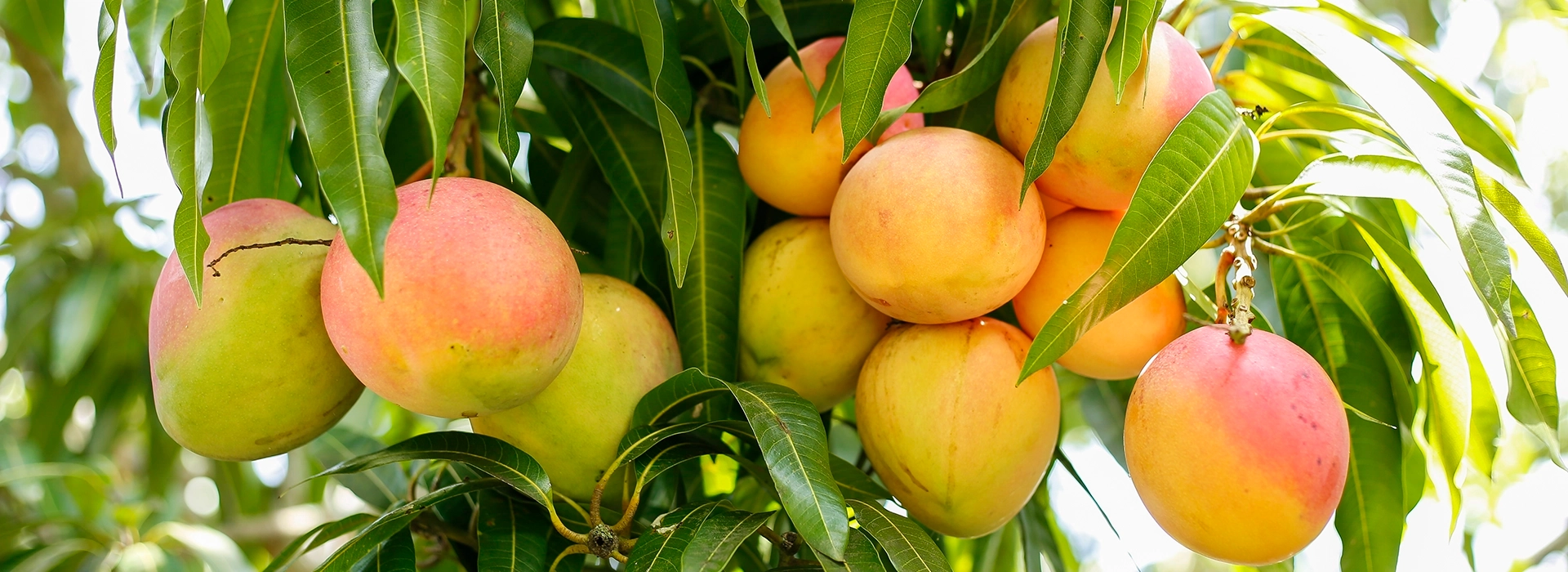
At the turn of summer and autumn, the Costa del Sol offers juicy, exotic mangoes that ripen in the Andalusian sun and delight connoisseurs with their distinctive flavor. Imagine a morning in Marbella: the sun rises over the Mediterranean Sea, and you are in a luxury villa, enjoying a fresh mango smoothie made from fruit sourced directly from plantations in the nearby Axarquía region. Although mangoes can be harvested for much of the year, the most flavorful ones in Andalusia are picked from August to October, with the peak harvest in September. It is a time when Andalusia captivates not only with its landscapes, but also with the tastes of the tropics.
Mango in Andalusia – a tropical fruit in the heart of Europe
The first references to mango appear in Sanskrit texts dating back over 4,000 years. The fruit symbolized love, fertility, and abundance. Buddhist monks planted mango trees near temples, believing their shade supported meditation. From India, mango spread to the Middle East and later, thanks to Portuguese sailors, to Africa and South America. In the 16th century it also reached Europe, where it quickly gained the status of an exotic luxury.
Mango from sacred symbol to pop culture
The mango has also played less obvious roles in history. In India it is the national fruit, in Bangladesh the national tree, and in the Philippines a national symbol. In China in the 1960s, a true mango cult emerged. When Mao Zedong gifted a crate of mangoes to factory workers, they treated the fruit almost like relics. Porcelain vessels and posters featuring mango motifs were created, and the fruit became a political symbol of unity and devotion.
Today, mango has a more modern image. The Alphonso variety from India is known as the “king of mangoes” and can sell for prices higher than fine wines. In cities such as Miami and Delhi, mango festivals are held where hundreds of varieties are showcased, and chefs demonstrate how this fruit can be incorporated into contemporary fusion cuisine.
From the plantations of Axarquía to luxury villas in Marbella
For many residents and investors, mango has become a symbol of the Costa del Sol lifestyle, where luxury means not only a sea-view villa but also everyday access to fresh, exotic flavors.
One of the best-known plantations in Axarquía began with just a few mango saplings brought from the Canary Islands in the 1970s. A local farmer planted them in his garden as an experiment. The first year was modest, but the following season the trees produced an abundant crop. The surplus fruit was shared with neighbors and a nearby school.
Today, that same farm supplies mangoes to luxury hotels and restaurants in Marbella. Its story has become a symbol of the success of exotic cultivation in Andalusia and an inspiration for property owners who value fresh produce and a close connection to nature.
Costa del Sol – the luxury of taste and lifestyle
Gecko Real Estate Group – Marbella Lifestyle
At Gecko Real Estate Group, we know that luxury is not just about property. It is about a lifestyle, of which the flavors of the Costa del Sol are an essential part. That is why on our blog we write about what makes Marbella truly special, from villa architecture to the region’s culture and cuisine.If you are thinking about owning a home in Marbella, imagine a morning on a terrace overlooking the sea, with fresh mango from a local plantation. This is Marbella Lifestyle, a way of living we want to show you.
Lifestyle on the Costa del Sol – more than just taste
◉ fresh fruit in private gardens;
◉ cocktails and desserts on terraces overlooking the sea;
◉ a source of inspiration for property owners and tourists seeking unique taste experiences.
Mango in a premium style – recipes and inspiration
◉ Mango and citrus smoothie with mint, perfect for mornings on Marbella terraces;
◉ Mango salad with arugula and goat cheese, an elegant lunch accompaniment;
◉ Mango dessert with vanilla ice cream and almond crumble, ideal for a summer evening.